Backpacking safety tips sets the stage for this enthralling narrative, offering readers a glimpse into a story that is rich in detail with casual formal language style and brimming with originality from the outset.
Embarking on a backpacking trip can be an exhilarating experience, but ensuring your safety is paramount to fully enjoy the adventure. From essential gear to wildlife encounters, this guide will equip you with the knowledge to stay safe in the great outdoors.
Importance of Backpacking Safety
When embarking on a backpacking trip, prioritizing safety is paramount to ensure a smooth and enjoyable experience in the great outdoors. Ignoring safety measures can lead to accidents, injuries, or even life-threatening situations that could have been avoided with proper precautions.
Risks of Ignoring Safety Measures
Statistics show that a significant number of backpacking incidents occur due to lack of preparation and disregard for safety protocols. From getting lost in unfamiliar terrain to encountering wildlife or extreme weather conditions, the risks involved in backpacking are real and should not be underestimated.
- Getting lost: Without proper navigation tools or knowledge of the area, backpackers can easily lose their way, leading to potentially dangerous situations.
- Wildlife encounters: Wildlife such as bears or snakes can pose a threat if proper precautions are not taken to prevent encounters.
- Extreme weather: Sudden changes in weather can catch backpackers off guard, leading to hypothermia, heatstroke, or other weather-related emergencies.
Essential Safety Gear for Backpacking
When venturing out on a backpacking trip, having the right safety gear can make a significant difference in ensuring a safe and enjoyable journey. Here are some must-have safety gear items that every backpacker should consider bringing along:
1. Navigation Tools
One of the most critical pieces of safety gear for backpacking is navigation tools, such as a map, compass, or GPS device. These tools are essential for staying on the right path, especially in remote areas where getting lost can be dangerous.
2. First Aid Kit
A well-stocked first aid kit is indispensable for treating minor injuries and illnesses while on the trail. It should include essentials like bandages, antiseptic wipes, pain relievers, and any personal medications you may need.
3. Headlamp or Flashlight
Light sources like a headlamp or flashlight are crucial for navigating in the dark, setting up camp after sunset, or signaling for help in emergencies. Make sure to pack extra batteries to avoid being left in the dark.
4. Emergency Shelter
An emergency shelter, such as a lightweight tent, bivy sack, or emergency blanket, can provide protection from the elements in case of unexpected weather changes or if you need to spend an unplanned night outdoors.
5. Fire Starter
Carrying a reliable fire starter, like waterproof matches or a lighter, is essential for staying warm, cooking food, and signaling for help if needed. Practice proper fire safety when using these tools.
6. Whistle
A whistle is a simple yet effective signaling device that can help rescuers locate you in case of an emergency. Attach it to your backpack or clothing for easy access.
7. Multi-Tool
A multi-tool with various functions, such as a knife, scissors, screwdriver, and bottle opener, can come in handy for repairs, gear adjustments, and other tasks while on the trail.
8. Personal Locator Beacon (PLB)
A PLB is a valuable safety device that can be used to send a distress signal and your location to emergency responders in case of a life-threatening situation. Register your PLB before your trip and know how to use it properly.
Wilderness First Aid Training
Acquiring basic wilderness first aid training is crucial before embarking on any backpacking trip. In remote areas where medical assistance may be far away, having the necessary skills can make a significant difference in emergency situations.
Importance of Wilderness First Aid Skills
Wilderness first aid skills are essential for handling injuries or illnesses that may occur while backpacking in remote locations. Knowing how to assess and treat common outdoor injuries such as sprains, cuts, burns, or insect bites can prevent minor incidents from escalating into more serious problems.
Moreover, in case of more severe emergencies like fractures, dislocations, or even heat stroke, being able to provide immediate first aid can stabilize the condition of the injured person until professional medical help can be reached.
Resources for Wilderness First Aid Training
- Wilderness Medical Associates International (WMA): Offers a variety of wilderness first aid courses designed for outdoor enthusiasts, including backpackers.
- National Outdoor Leadership School (NOLS): Provides wilderness medicine courses that cover first aid techniques specific to outdoor environments.
- American Red Cross: Offers wilderness and remote first aid courses that focus on preparing individuals for emergencies in remote settings.
Navigation and Communication Devices
Carrying navigation tools and communication devices while backpacking is crucial for ensuring your safety in the wilderness. These tools can help you stay on course, find your way in unfamiliar terrain, and call for help in case of emergencies.
Importance of Navigation Tools
- Maps, compasses, and GPS devices are essential for navigating through different trails and terrains.
- They can help you determine your location, plan your route, and avoid getting lost.
- Always make sure to familiarize yourself with how to use these tools before heading out on your backpacking trip.
Significance of Communication Devices
- Satellite phones and personal locator beacons are vital for contacting emergency services or signaling for help in remote areas.
- These devices can transmit your location to rescue teams, enabling them to reach you quickly in case of an emergency.
- It is important to test your communication devices before your trip to ensure they are in working condition.
Tips for Effective Use of Navigation and Communication Devices
- Keep your navigation tools easily accessible and regularly check your position on the map to avoid veering off course.
- Practice using your compass and GPS device to orient yourself and follow your planned route accurately.
- In case of an emergency, remain calm, use your communication device to call for help, and provide your exact location and situation to the rescue team.
Safe Food and Water Practices
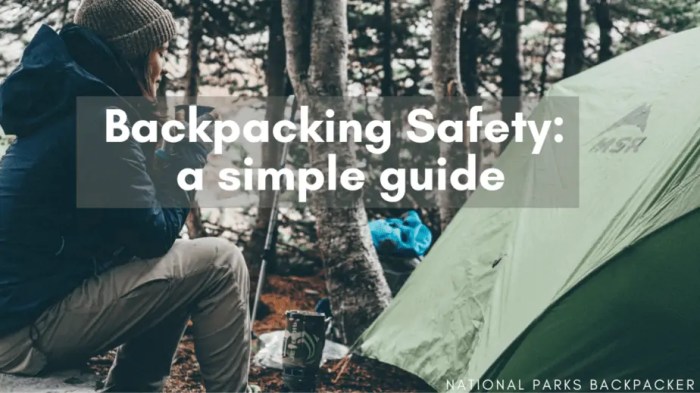
Proper food storage and water purification techniques are crucial for backpackers to stay safe and healthy during their outdoor adventures. Without taking the necessary precautions, backpackers may be at risk of foodborne illnesses and dehydration from contaminated water sources.
Food Safety Tips
- Always store food in airtight containers to prevent contamination by insects or animals.
- Keep perishable items in a separate cooler with ice packs to maintain a safe temperature.
- Use a food thermometer to ensure meat is cooked to a safe internal temperature.
- Practice proper hand hygiene before handling food to prevent the spread of bacteria.
Water Purification Techniques
- Boil water for at least one minute to kill any harmful bacteria or parasites.
- Use water purification tablets or filters to remove contaminants from natural water sources.
- Avoid drinking from stagnant water sources, as they are more likely to be contaminated.
- Carry enough water or have a reliable method of water purification to stay hydrated throughout your trip.
Impact of Dehydration and Malnutrition
Dehydration and malnutrition can have serious consequences for backpackers, including fatigue, dizziness, and weakness. To avoid these issues, it is essential to stay properly hydrated and consume nutrient-rich foods while on the trail.
Wildlife Safety and Encounters
When backpacking in the wilderness, encountering wildlife is a possibility. It is important to understand how to safely coexist with animals to ensure both your safety and theirs. Here are some guidelines to help you navigate wildlife encounters while backpacking.
Preventing Wildlife Encounters
- Avoid leaving food or trash unattended, as it can attract wildlife to your campsite.
- Keep a safe distance from wildlife and never approach or attempt to feed them.
- Make noise while hiking to alert animals of your presence and avoid surprising them.
What to Do in Case of Wildlife Encounters
- Stay calm and avoid sudden movements. Do not run away, as it may trigger a chase response.
- Back away slowly while maintaining eye contact if you encounter a predator like a bear or mountain lion.
- If attacked, fight back aggressively and use any available tools or objects to defend yourself.
Weather Awareness and Preparedness
When backpacking, being aware of the weather conditions and being prepared for any changes is crucial for your safety and well-being during your outdoor adventures.
Importance of Monitoring Weather Forecasts
It is important to regularly check weather forecasts before and during your backpacking trip to anticipate any upcoming changes. This will help you make informed decisions and adjust your plans accordingly to avoid dangerous situations.
Tips for Staying Safe in Extreme Weather
- During thunderstorms, seek shelter in a sturdy building or vehicle to avoid lightning strikes. Avoid open fields, hilltops, and isolated trees.
- In case of a heatwave, stay hydrated, wear lightweight and light-colored clothing, and take frequent breaks in shaded areas to prevent heat-related illnesses.
- During cold snaps, layer up with appropriate clothing, including insulating layers and waterproof outer shells. Carry extra clothing to stay warm and dry.
Importance of Appropriate Clothing and Gear
Having the right clothing and gear for different weather scenarios is essential to stay safe and comfortable during your backpacking trip. Waterproof jackets, insulated layers, sun protection gear, and sturdy footwear are some examples of essential items to pack based on the expected weather conditions.
Leave No Trace Principles
When backpacking, it is crucial to adhere to the Leave No Trace principles to minimize our impact on the environment and preserve the wilderness for future generations. These principles guide us on how to enjoy the outdoors responsibly and sustainably.
Minimize Campfire Impact
- Use established fire rings or designated fire pits when available.
- Keep fires small and manageable.
- Only burn wood found on the ground and make sure to fully extinguish the fire before leaving.
Dispose of Waste Properly
- Pack out all trash, including food scraps, and do not leave any waste behind.
- Bury human waste at least 200 feet away from water sources and trails in a small hole at least 6-8 inches deep.
- Carry a small trowel for digging cat holes to dispose of waste properly.
Respect Wildlife
- Observe wildlife from a distance and do not approach or feed them.
- Do not disturb nesting areas or wildlife habitats.
- Keep food stored securely to prevent attracting animals to your campsite.
BACKPACKING TIPS
When it comes to backpacking, especially for beginners, there are several tips that can make your experience safer and more enjoyable. From packing efficiently to planning your routes, these tips can help you make the most out of your backpacking adventure.
Packing Efficiently
Packing efficiently is crucial when it comes to backpacking. Here are some tips to reduce the overall weight of your backpack:
- Choose lightweight gear and equipment
- Avoid packing unnecessary items
- Opt for multi-purpose items to save space
- Distribute weight evenly in your backpack
Planning Routes and Campsites
Planning your routes and choosing campsites wisely can enhance your backpacking experience. Consider the following strategies:
- Research and map out your route in advance
- Check for trail conditions and potential hazards
- Select campsites with access to water sources and flat ground
- Be mindful of regulations and permits for camping in specific areas
Maximizing the Experience
To make the most of your backpacking trip, consider the following tips:
- Take breaks to rest and enjoy the surroundings
- Engage with nature by observing wildlife and plants
- Capture memories through photography or journaling
- Connect with fellow backpackers and share experiences
BACKPACKING TRIPS
When it comes to backpacking trips, each journey is a unique adventure filled with unforgettable experiences, challenges, and valuable lessons. From exploring breathtaking landscapes to overcoming obstacles in the wilderness, backpacking trips offer a chance to connect with nature and push personal boundaries.
Personal Experiences and Lessons Learned
- One of the most memorable moments from my backpacking trips was reaching the summit of a challenging mountain after a steep climb. The sense of accomplishment and the stunning panoramic views made all the effort worthwhile.
- Facing unexpected weather changes and having to quickly set up camp taught me the importance of being prepared for anything in the wilderness. Always pack extra layers and be ready to adapt to changing conditions.
- Encountering wildlife, such as deer or eagles, up close during backpacking trips was a humbling experience that reminded me of the importance of respecting and coexisting with nature.
Must-Visit Backpacking Destinations
- The Inca Trail in Peru offers a once-in-a-lifetime opportunity to hike to the iconic Machu Picchu while immersing yourself in the rich history of the Incan civilization.
- The Pacific Crest Trail in the United States spans over 2,600 miles from Mexico to Canada, showcasing diverse landscapes from desert terrain to lush forests.
- The Annapurna Circuit in Nepal is renowned for its stunning views of the Himalayas and unique cultural encounters with local communities along the trail.
As you prepare for your next backpacking journey, remember these safety tips to protect yourself and fully immerse in the wonders of nature. By prioritizing safety, you can embrace the thrill of exploration while being well-prepared for any challenges that come your way. Stay safe, stay adventurous, and happy trails!
FAQ Insights
What should I do if I encounter a bear while backpacking?
If you encounter a bear, remain calm, speak softly, and slowly back away while facing the bear. Do not run or make sudden movements.
How can I prevent altitude sickness while backpacking in high-altitude areas?
To prevent altitude sickness, acclimate yourself gradually, stay hydrated, and avoid alcohol and strenuous physical activity until your body adjusts to the altitude.
Is it safe to drink water from natural sources like streams and rivers?
It is not recommended to drink untreated water from natural sources. Always carry a water filter or purification tablets to ensure safe drinking water while backpacking.